
The upcoming Delhi Assembly elections have turned into a fierce battleground of slogans, one-liners, and AI-generated memes between the three main contenders: AAP, BJP, and Congress. From the AAP branding the BJP as the "Bharatiya Jhootha Party" (Indian Liar Party) to Prime Minister Narendra Modi calling the AAP "AAP-Daa" (disaster), the war of words has taken center stage. With the poll results set to be announced on February 8, the elections are being viewed as a referendum on the AAP's governance model, which emphasizes free welfare schemes. The ruling party faces stiff competition from a resurgent BJP that is seeking to return to power in the capital after a gap of more than 25 years. The Congress, although a long shot, hopes to regain its lost ground.

Ask rediffGURU and tax expert Mihir Tanna your income tax-related questions.

Prime Minister Narendra Modi launched a scathing attack on the TMC, accusing them of prioritizing vote-bank politics over national security and Bengali identity by promoting infiltration. He also highlighted the BJP's vision for a developed and prosperous Bengal, promising a clean break from the past.

DAP does not consider past I-T returns to match a taxpayer's resources with their expenditures or investments, points out Harsh Roongta.

Per capita income has more than doubled to Rs 1.97 lakh in around nine years. Indian economy has increased in size from being 10th to 5th largest in the world in the past nine years. Seven priorities of the Budget, 'Saptarishi', are inclusive development, reaching the last mile, infrastructure and investment, unleashing the potential, green growth, youth power and financial sector.

The government on Thursday extended the deadline till December 31 for filing of income tax returns by individuals for the financial year 2021, amid the coronavirus pandemic and technical glitches in the IT portal. Earlier, the deadline was extended to September 30, 2021. Usually, the last date for filing the ITR (Income Tax Returns) for the individual taxpayers is July 31. "On consideration of difficulties reported by the taxpayers and other stakeholders in filing of Income Tax Returns and various reports of audit for the Assessment Year 2021-22 under the Income-tax Act, 1961, Central Board of Direct Taxes (CBDT) has decided to further extend the due dates for filing of Income Tax Returns and various reports of audit for the Assessment Year 2021-22," the finance ministry said in a statement.

The Income-Tax (I-T) department has issued around 8,000 notices to salaried employees, self-employed individuals, and companies who made significant donations to charitable trusts. The department suspects potential tax evasion, as records of these donations do not correspond with the income and expenses of those making them. Sandeep Bajaj, managing partner, PSL Advocates & Solicitors, says, "Notices were issued for donations made during the assessment years of 2017-18 through 2020-21."

rediffGURU Samkit Maniar answers readers' personal income tax queries

While using the family to save tax is legal and smart, ensure you use the ones where clubbing income laws isn't a concern, advises Bindisha Sarang.

The Supreme Court verdict on mining royalty case will give a further jolt to the Indian mining industry and will have very large financial implications, as arrears may work out to the tune of more than Rs 1.5 lakh crore to Rs 2 lakh crore, industry players said on Wednesday. The Supreme Court on Wednesday upheld the power of states to levy tax on mineral rights and mineral-bearing land, and allowed them to seek refund of royalty from April 1, 2005 onwards. According to a senior mines ministry official, the verdict will have a very large financial impact on mining, steel, power and coal companies.

Financial and tax expert Anil Rego of Right Horizons has his doubts.

US President Donald Trump's plan to sign an executive order to cut prescription drug prices by 30-80 per cent could lead to a global price adjustment with pharma firms pushing lower-cost countries like India to raise prices, according to the economic think tank GTRI. The US move could push prices in lower-cost countries like India as manufacturers would seek to recover losses and R&D costs from these nations.

'When people have money in their hands, they make their judgment about whether they want to spend it entirely or spend some out of it.'

'That way you're not hostage just to US sort of exports to India.'

The government has shown its efforts in phasing out the four-and-a-half-decade old Income Tax Act of 1961 with a new and 'taxpayer friendly' Code. The Code is designed to provide stability to the tax regime and is based on the accepted principles of taxation and best international practices.

Dear Finance Minister, We don't expect magic, just a little understanding and some tax relief that feels like a real reward, not a bare minimum. A little extra fuel in our wallets could go a long way, pleads Vatsal Ramaiya

rediffGURU T S Khurana answers readers' personal income tax queries.
P Chidambaram said tax rates that were announced in 1997 (in the Budget he had presented then), have remained and have survived four governments and four finance ministers.
There has been considerable discussion during the past few years about the Government changing from the EEE to EET Tax regime related to tax saving financial products. The acronyms have a simple expansion: Exempt -- Exempt -- Exempt and Exempt -- Exempt -- Tax. With the upcoming Budget expected to give some direction on this issue, its time we understood what these terms mean and their impact on our pockets.
India has earned the dubious distinction of being the country adding the maximum teeth to its tax regime since last year, says a study by Forbes.
Though the states might lose because of providing tax credit on input, they will also gain by way of taxing services. At present, only the Centre taxes around 100 types of services. Thus, the actual losses states might incur cannot be estimated until the GST is implemented.

Only those who stick to the old I-T regime will get this benefit.

'Skirmishes with officials in the Press Information Bureau were an everyday affair as the newspapers sought clearances from the media censors for publishing the next day's editions'

The new system would be especially beneficial for Qualified Foreign Investors.

"We are trying to bring the new taxation regime, which can last for another 50 years. Therefore, our endeavour is to see that new taxation system should include the basic features and time tested procedures of existing act, which have survived judicial security over the years."
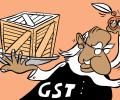
The decision to impose a 28 per cent tax on the full face value of bets placed on online games will be implemented from October 1 even though there was demand for a review from states like Delhi and Goa, finance minister Nirmala Sitharaman said on Wednesday. The GST Council -- the highest decision making body of the new indirect tax regime that comprises Union finance minister and representatives of all states -- discussed the language of amendments that will be needed to enabling taxing online gaming, she said after the panel meeting.

'If I were in the Indian government, I would look at the growth projections in the next year. If it is a good and normal growth number, I would go for roll back.'

So how do you rate the Modi government's 11th budget?

Finance Minister Nirmala Sitharaman will present the Union Budget for 2023-24 in Parliament on February 1. The Budget is a statement of the government's estimated receipts and expenditures for a fiscal year (April 1 to March 31). It's divided into Revenue and Capital Budget. The Revenue Budget includes the government's revenue receipts and expenditures while the Capital Budget includes its capital receipts and payments.

Moody's Ratings on Wednesday said US tariffs will weaken credit conditions and raise defaults risks especially for low-rated and speculative grade corporates. It said that an unpredictable US trade policy will lead to a deterioration in global credit conditions and macroeconomic impact will slow growth with a growing possibility of recession.

From second homes and AC rail travel to private tutors, astrologers and marriage-makers come under the tax net

With general government debt now approaching three-quarters of GDP, and only incremental reform efforts visible, Pakistan risks prolonging its economic stagnation unless fundamental governance, regulatory, and industrial overhauls are undertaken.

The Enforcement Directorate (ED) in India has declared that cash and gold worth approximately Rs 52 crore, seized from an abandoned SUV in Madhya Pradesh last year, belonged to former state transport department constable Saurabh Sharma. The ED's statement ends months of speculation about the ownership of the seized assets and comes as part of an ongoing investigation into corruption charges against Sharma. The agency has also attached assets worth Rs 92.07 crore belonging to Sharma and his associates, alleging they were acquired through illegal means.

Ahead of the Union Budget 2023, insurers are hoping that the Centre will act on their recommendations, which includes increasing the limit for tax deduction under 80D of the Income Tax Act. Also among them are issuance of long-term bonds, tax incentives for home insurance premiums, and a separate section to claim deduction for term-insurance premium, among others. These suggestions would help improve the penetration of insurance in the country.
Recommendations on direct taxes vary from seeking cut in corporate tax, re introduction of standard deduction for salaried employees, removal of STT, DDT, etc.
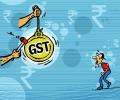
GST authorities have identified about 17,000 non-existent GSTINs and cancelled over 4,900 registrations in the ongoing pan-India drive against fake registration, a senior tax official said on Wednesday. Currently, there are 1.40 crore businesses registered under Goods and Services Tax, nearly double the number of businesses registered in indirect tax regime pre-GST rollout. Central Board of Indirect Taxes and Customs (CBIC) member Shashank Priya said in the drive against fake registration, till July 4, over 69,600 GST Identification Numbers (GSTINs) have been selected for physical verification by field tax officers.

The White House website had a new look with the bold banner headline 'America is back' seconds after Trump was sworn in as the 47th President of the United States on Monday.
